

Last Updated on September 6, 2026 by YeJahan
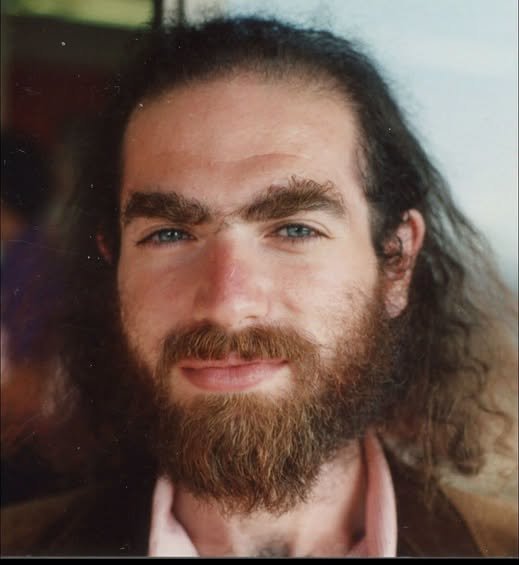
The extraordinary story of a man who solved the puzzle of the century, rejected a $1 million fortune, and chose absolute isolation over compromised fame
BY MUHAMMAD NAFEES NAEEM
In 2010, reporters tracked down a crumbling, Soviet-era apartment building in Saint Petersburg’s Frunzenskiy district. They were trying to secure a statement from the man inside, who had just been awarded a one-million-dollar Millennium Prize for solving a century-old riddle. But when they knocked, the man didn’t even open the door. Instead, he answered through the closed wood with a flat, indifferent refusal: “I have everything I want.” That man was Grigori Perelman, known to his few close friends simply as “Grisha”—a genius who found the world’s highest honors entirely worthless and the fortune he won useless.
Born to a Russian-Jewish family in Leningrad on June 13, 1966, Perelman’s childhood was far from conventional. Young Grisha was not like the children playing in the streets, enjoying parties, and chasing normal fun; instead, he was constantly found engrossed in books of brainteasers, physics problems, and classical music. His father, Yakov Perelman, was an electrical engineer, and his mother, Lyubov Lvovna, was a teacher of mathematics at a technical college. She gave up her own postgraduate aspirations to raise him, teaching him both mathematics and the violin. She made mathematics a moral landscape for him, rather than a mere school subject.
In the field of mathematics, logical rules govern all systems, outcomes are strictly derived, and calculations remain entirely verifiable; thus, before he shook the foundations of modern mathematics, Grigori Perelman had realized the absolute certainty of logic.
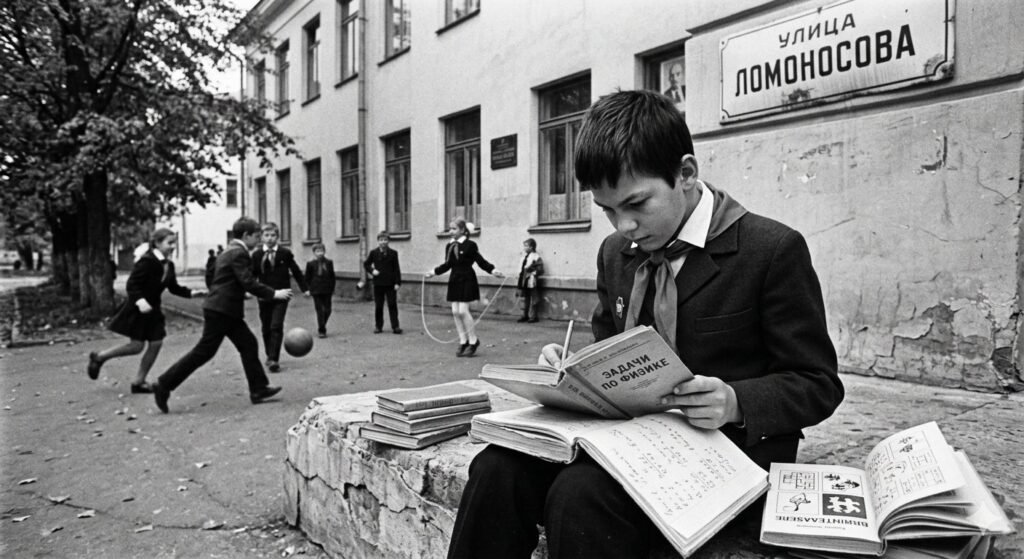
At the age of 14, Perelman joined an after-school mathematics club run by a nineteen-year-old coach named Sergei Rukshin, who meticulously groomed his talent. By January 1982, Perelman was selected for the Soviet Mathematical Olympiad team. At just 16 years old, he achieved a perfect score and a gold medal at the Olympiad in Budapest. It was a flawless victory, but for Perelman, the real prize wasn’t the gold medal around his neck—it was the quiet, uninterrupted hours spent inside his own mind, where the geopolitical chaos of the Soviet Union’s final decade could not reach him.
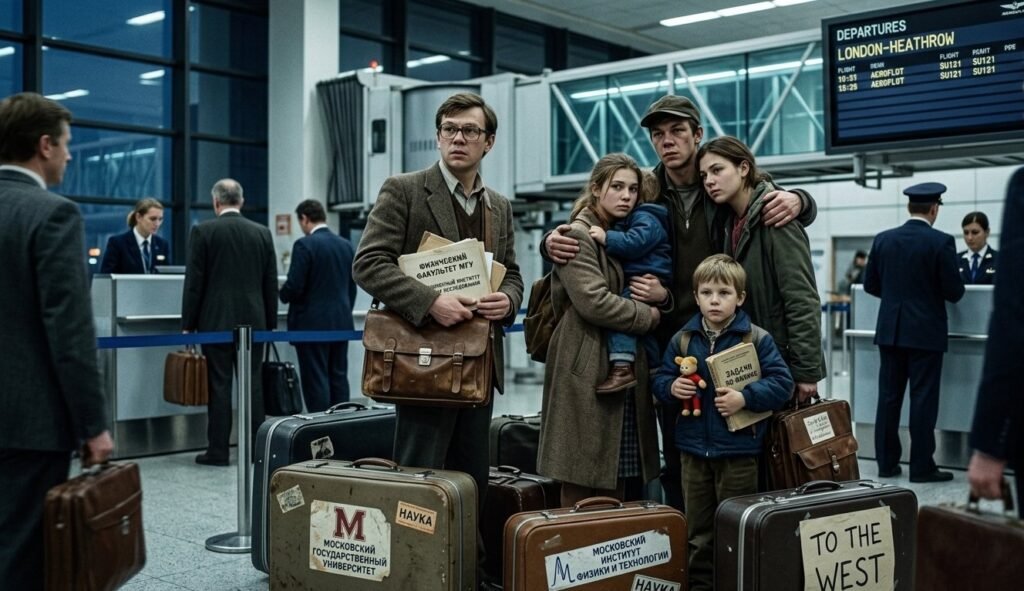
The collapse of the Soviet Union in the early 1990s triggered a mass migration of renowned Russian scientists to the West. Perelman found himself among these departing geniuses. After arriving in the United States, he secured prestigious research fellowships at New York University and the University of California, Berkeley. Much like how the great Indian poet Sahir Ludhianvi and Pakistan’s Jaun Elia stood completely at odds with the conventional standards of poets in the subcontinent, Perelman—with his disheveled long hair, overgrown fingernails, and cheap, worn-out clothes—was a fascinating anomaly to the American academic elite.
Decades earlier, in 1982, mathematician Richard S. Hamilton had introduced the concept of Ricci flow in his seminal paper, “Three-manifolds with positive Ricci curvature.” This framework fundamentally transformed the field of Riemannian geometry and provided a potential roadmap to solving the Poincaré Conjecture—a legendary riddle centered on the fundamental shape of our universe, first proposed by French mathematician Henri Poincaré in 1904. It was during Perelman’s time in America that he deeply studied Hamilton’s lectures and realized the tool’s hidden potential.
For nearly a century, the world’s greatest minds had tried and failed to prove the hypothesis. The problem was so critical to the understanding of space and geometry that the Clay Mathematics Institute eventually designated it a Millennium Prize Problem, offering a $1 million reward for its solution. The announcement of this reward sparked a frantic race, with many mathematicians aggressively self-promoting and rushing half-baked papers into publication to chase prestige.
Instead of pursuing fame and yearning for wealth, Perelman treated mathematics strictly as a pure passion, completely refusing to treat it as a career ladder. He was deeply insulted when top-tier institutions like Stanford and Princeton demanded standard CVs and recommendation letters before courting him for permanent professor positions. To Perelman, his completed work spoke entirely for itself. Requiring bureaucratic paperwork to validate his genius felt like a symptom of a profoundly sick academic system.

Consequently, the disillusioned mathematician turned his back on the American university system in 1995. Rejecting all subsequent job offers, he packed his bags and flew back to Saint Petersburg. There, he took a low-paying research position at the Steklov Institute, earning less than $100 a month.
He retreated into total isolation, dedicating his life to solving the century-old problem—not for financial gain, but for the sake of the truth itself. For seven years, he lived an entirely anonymous life, quietly working alone in his apartment to take Hamilton’s incomplete ideas on the Ricci flow and push them far past the limits of human imagination.
Then, between 2002 and 2003, without any media hype, expectations of a reward, or grand declarations of success, he uploaded three short papers directly to arXiv.org, a free online repository for physics and math preprints. Perelman simply uploaded the digital files, sent a brief email to a few colleagues in America with a simple one-liner—”I think you might be interested”—and quietly went back to his life.
Nobody realized at the time that he hadn’t just solved a century-old riddle; he had completely rewritten the rules of geometry by demonstrating how to smoothly iron out the complex “kinks” and singularities of space.
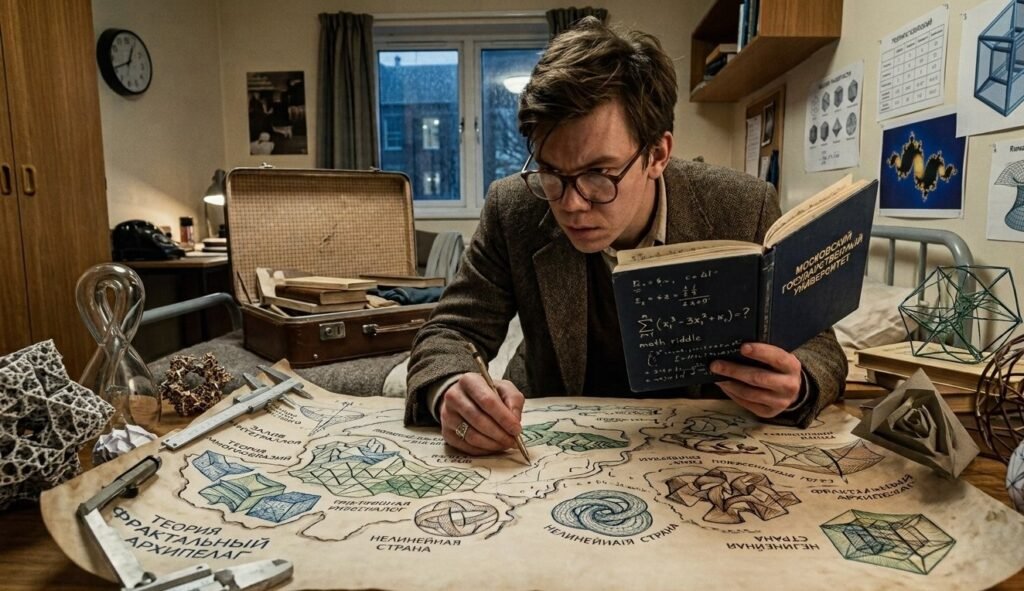
Over the next year, he uploaded two more installments, throwing the mathematical world into total chaos. The greatest minds in the field dropped their own research to spend years meticulously unpacking Perelman’s work, desperate to find a single flaw. They couldn’t; the proof was absolute.
An obscure Russian mathematician, working out of a crumbling apartment with a dial-up internet connection and virtually no contact with the outside world, had single-handedly solved the greatest puzzle of the century: the Poincaré Conjecture.
In 2006, the International Mathematical Union awarded Perelman the prestigious Fields Medal, but he refused to attend the ceremony in Madrid.
“The prize was completely irrelevant to me,” he later noted. “Everybody understood that if the proof is correct, then no other recognition is needed.”
When the Clay Mathematics Institute officially offered him the $1 million Millennium Prize in 2010, Perelman said no once again. He publicly stated that the committee’s decision was unfair, arguing that his contribution to solving the Poincaré Conjecture was no greater than that of Richard Hamilton, who had built the framework of the Ricci flow.
To the public, turning down a million dollars seemed like madness. But to Perelman, accepting the money meant validating a system he despised and rebelled against; he refused to become a trophy for an academic establishment he viewed as corrupt.
Shortly after, Perelman resigned from his post at the Steklov Institute. He severed ties with his colleagues, abandoned his mathematical career, and retreated permanently behind the locked door of the Saint Petersburg apartment he shared with his elderly mother.
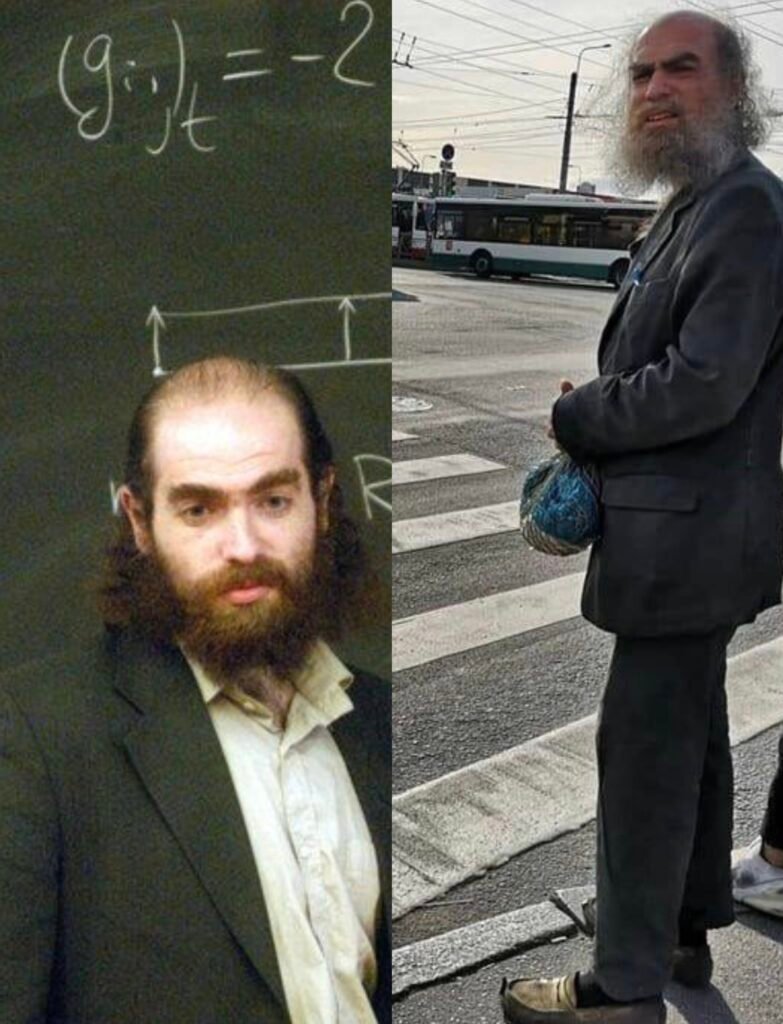
Today, Grigori Perelman remains a ghost in the machine of modern science. He lives a life of extreme austerity in a modest apartment, surviving on a small pension. The fame, the fortune, and the global acclaim remain permanently locked outside his door, left entirely uninvited. In a world that increasingly measures human worth by digital followers, viral fame, and bank balances, Perelman’s quiet defiance remains as complex and unyielding as the Poincaré Conjecture itself.
The author is a senior journalist associated with a pioneering TV channel in Pakistan. pynmedianews@gmail.com