Last Updated on November 18, 2026 by YeJahan
YEJAHN DESK
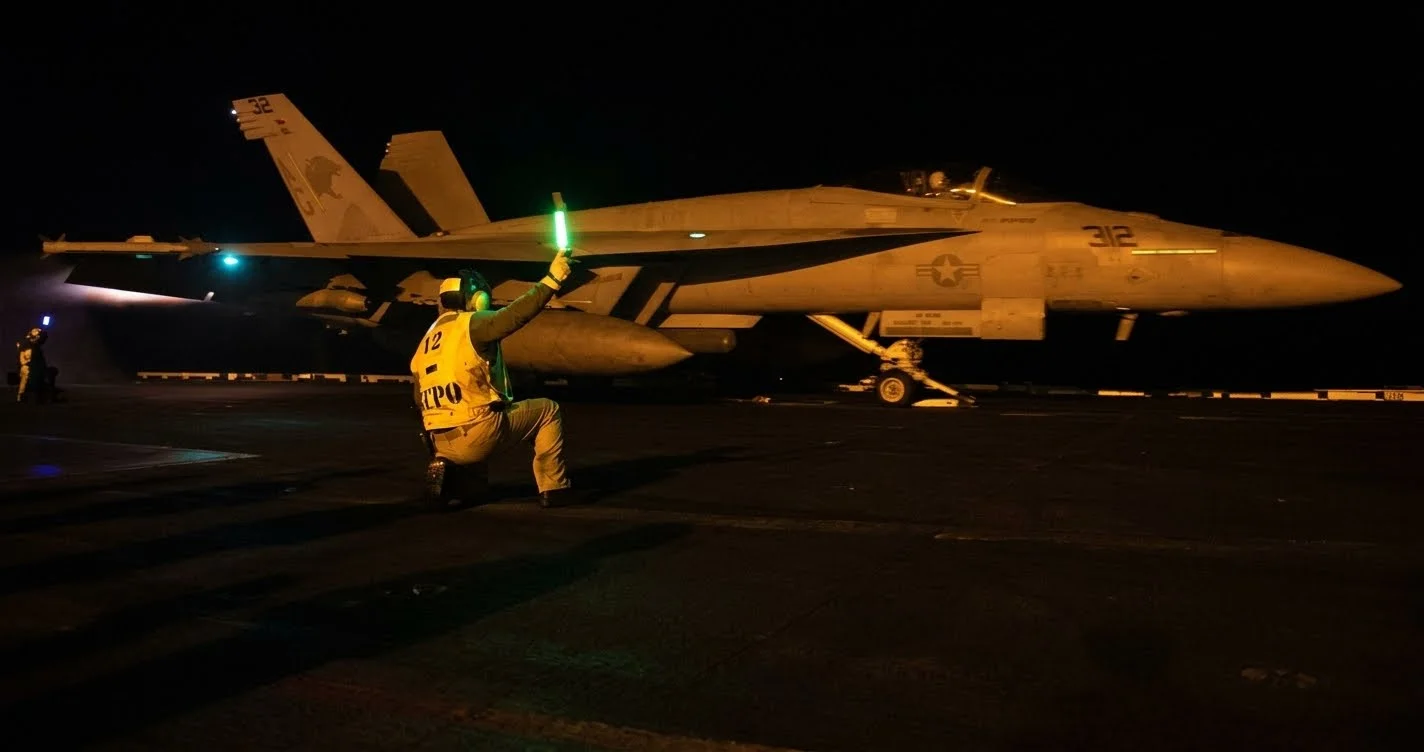
WASHINGTON (Nov 17): U.S. fighter jets carried out fresh “self-defense” strikes against an Iranian missile launch site on Qeshm Island on Tuesday, triggering a wave of retaliatory drone and aerial attacks against American-allied Gulf states early Wednesday morning.
According to a U.S. military official, American aircraft used precision munitions to hit the installation in response to Islamic Revolutionary Guard Corps (IRGC) aggression directed at U.S. personnel and assets. The official added that U.S. Central Command (CENTCOM) remains “highly vigilant and fully postured to protect Americans across the region.”
Iranian state media confirmed an “enemy attack” on the outskirts of a city on Qeshm Island, a strategic landmass in the Strait of Hormuz. Ahmad Nafisi, the deputy governor of Hormozgan province for political and security affairs, said the bombardment caused no damage to vital infrastructure, commercial hubs, or residential areas.
While Pentagon officials framed Tuesday’s operation as a routine defensive measure consistent with recent engagements near the Strait of Hormuz rather than a major escalation, the strikes were swiftly followed by cross-border retaliation.
Early Wednesday, air raid sirens sounded in Bahrain, where the military announced it had intercepted “a number of Iranian aerial attacks.” Having faced repeated strikes over the past week, Bahraini defense officials condemned Tehran’s actions, stating that “Iran continues its systematic hostile approach through its criminal attacks targeting the Kingdom of Bahrain.”
Simultaneously, Kuwait’s military reported that its air defenses were engaging “hostile drone attacks.” While Kuwaiti authorities did not immediately disclose details regarding casualties, damage, or the origin of the drones, Iranian state broadcaster Press TV reported that Tehran’s military had targeted U.S. forces stationed at Kuwait’s Ali Al Salem Air Base. CENTCOM has not yet commented on the reported strike on the base.
The tit-for-tat violence unfolds as Washington bolsters its naval footprint in the Persian Gulf. A third U.S. aircraft carrier strike group recently arrived in CENTCOM’s area of responsibility, reinforcing ongoing operations to blockade Iranian ports and escort commercial vessels navigating the Strait of Hormuz.
Despite the mounting military pressure, a diplomatic breakthrough remains elusive. President Donald Trump has warned that the U.S. could resume full-scale combat operations if Tehran fails to meet his administration’s demands.
Having largely held off on major offensive action ahead of the recent U.S. midterm elections, Trump is now weighing his next move in the absence of a last-minute agreement. With Democrats set to assume control of both the House and the Senate in January, and military planners warning that maintaining the current naval blockade and defensive posture indefinitely is unsustainable, the president faces a narrowing window to decide how to proceed.
Copyright YeJahan News Network, 2026