
Last Updated on October 28, 2026 by YeJahan
MUHAMMAD BIN SAEED
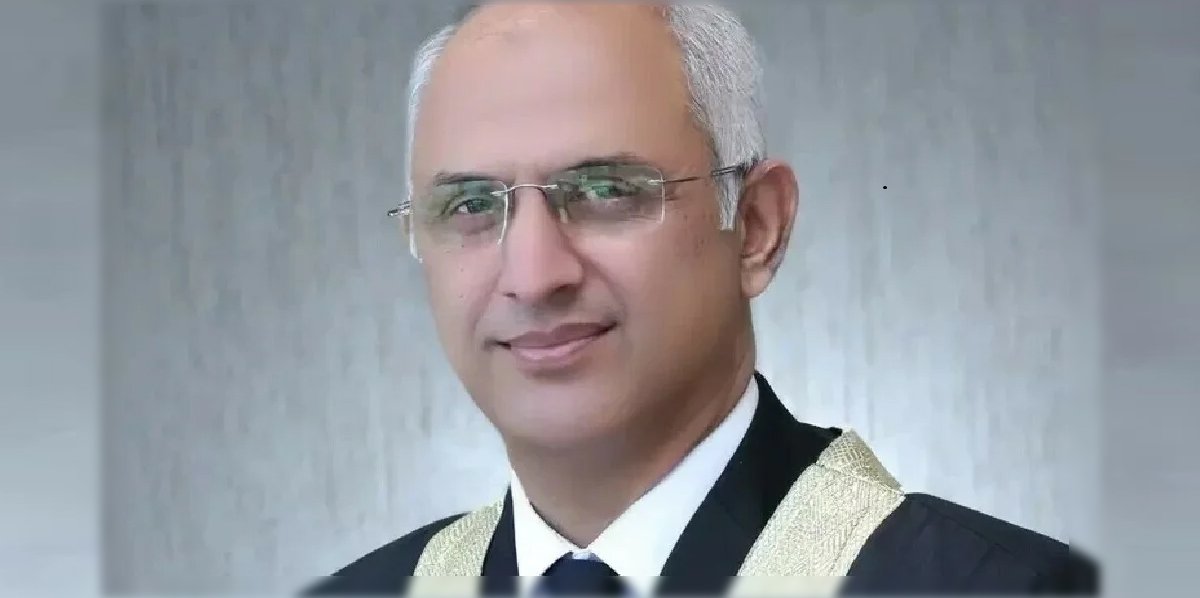
LAHORE (Oct 28): In a major blow to the country’s superior judiciary, Lahore High Court (LHC) Judge Mohsin Akhtar Kayani resigned from his office on Wednesday, citing severe health issues alongside grave institutional concerns over what he described as the executive’s “growing control” over the judicial system.
In a detailed resignation letter addressed to the President of Pakistan, Justice Kayani stated that while it had been a privilege to serve on the benches of both the Islamabad High Court (IHC) and the LHC, recent legislative changes had forced his hand.
“In my considered view, the changes introduced through the 26th and 27th Constitutional Amendments have compromised the independence and institutional integrity of the high courts,” Justice Kayani wrote. He added that he had personally witnessed executive interference extending directly to the appointment and transfer of judges—a practice he warned has “seriously eroded public confidence” in the fairness of the judicial process.
The judge also lamented the plight of ordinary litigants, whom he termed the principal stakeholders of the justice system, noting that their suffering continues to deepen while other actors have become the primary beneficiaries of the system.
“In these circumstances, my conscience does not permit me to continue on the bench,” he declared, announcing his decision to lay down his robes and return to private legal practice.
Justice Kayani’s resignation comes years ahead of his scheduled retirement date of February 10, 2032, capping off a tumultuous period marked by administrative friction and high-profile institutional pushback.
Originally hailing from Islamabad, Justice Kayani previously served as the senior puisne judge of the IHC and was widely expected to be elevated as its Chief Justice. However, his judicial trajectory was disrupted following the controversial inter-high court transfer of the incumbent IHC Chief Justice, Sardar Muhammad Sarfraz Dogar, from the LHC.
As a lawyer, I bid farewell with a heavy heart to one of Pakistan’s finest judges, Justice Mohsin Akhtar Kayani. His courage on the bench will not be forgotten. May we find the strength to keep hope alive and carry on the fight for an independent judiciary. https://t.co/koGTjqGRVM
— Barrister Maleeka Bokhari (@MalBokhari) October 28, 2026
Justice Kayani challenged these inter-court transfers, but the Supreme Court’s constitutional bench ultimately upheld them. The dispute escalated further when Justice Kayani and other senior IHC judges approached the apex court to challenge Chief Justice Dogar’s administrative powers, alleging that the IHC chief’s office was operating as a “monocracy” where judges could be arbitrarily excluded from the judicial roster.
Following his own subsequent transfer to the LHC in April this year, Justice Kayani was stripped of his seniority, dropping to 12th on the LHC seniority list. Despite his extensive experience, he was notably excluded from any division benches at the principal seat in Lahore.
His final assignment came just days ago, when a fresh judicial reshuffle placed him on a single bench at the Rawalpindi registry—a move that effectively returned him to the twin cities but cemented his sidelined status within the provincial judiciary.
This is not the first time Justice Kayani has taken a stand against external pressures. He was notably one of the six IHC judges who authored a bombshell letter to the Supreme Judicial Council (SJC) members in March 2024. That letter sent shockwaves through the state apparatus by accusing the country’s intelligence agencies of systemic interference in judicial affairs, alleging covert surveillance inside judges’ homes and the abduction and torture of their relatives.
Throughout his career, Justice Kayani was also recognized for his strict stance on human rights, frequently presiding over high-profile cases involving enforced disappearances and aggressively advocating for legislative reforms to penalize state-backed abductions.
An alumnus of FG College for Men in Islamabad, Justice Kayani earned his LLB from the University of the Punjab in 1994, later securing an LLM from Karachi University and a postgraduate diploma in human rights from Peshawar University in collaboration with Oslo University.
Imran Khan’s wife denied jail freedom over £190m corruption scandal!
Before his elevation to the bench as an IHC judge in December 2015, Kayani was a prominent bar leader. He served as the General Secretary of the Islamabad District Bar Association (2002–03) and later as the President of the Islamabad High Court Bar Association (2013–14).
The resignation is expected to deepen the ongoing debate surrounding judicial independence in Pakistan, particularly in the wake of recent constitutional amendments that critics argue have significantly weakened the power of the superior courts.
Copyright YeJahan News Network, 2026