Last Updated on October 17, 2026 by YeJahan
YEJAHAN REPORT
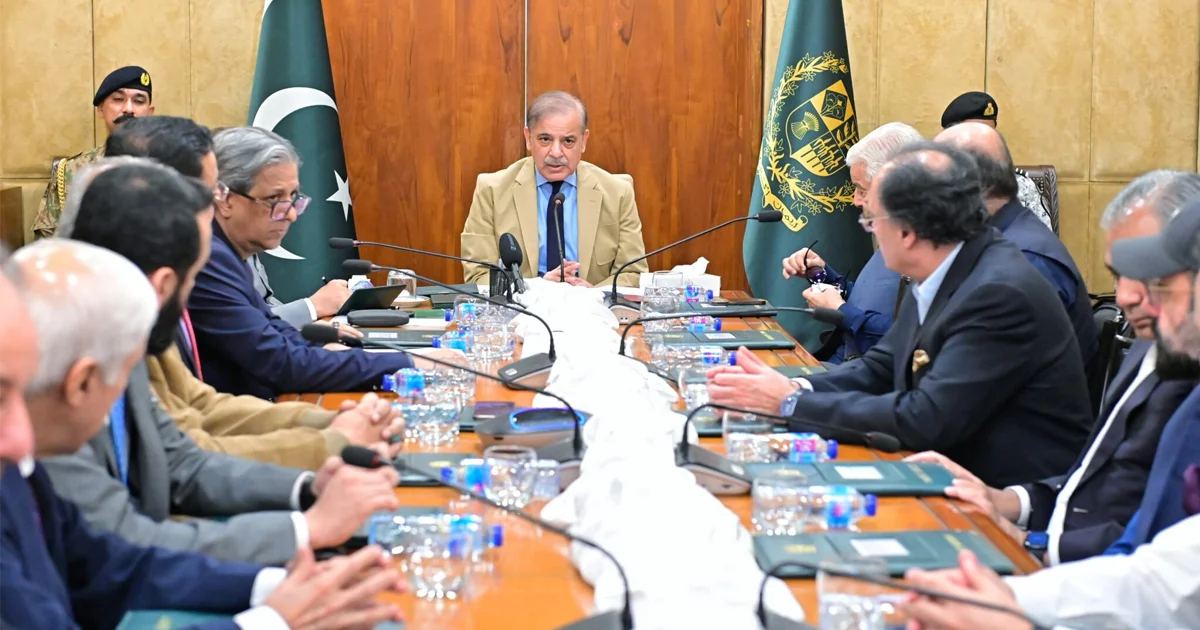
ISLAMABAD (Oct 17): The federal cabinet has approved a sweeping governance overhaul for 12 critical districts in Khyber Pakhtunkhwa, greenlighting the creation of the Area Representative and Development Council (ARDC). The newly minted body, paired with the appointment of 48 local representatives for an initial six-month term, marks a pivotal shift toward decentralized authority in the region.
Former Governor Shokatullah Khan will chair the council, with Malik Khan Marjan serving as deputy chairman. Rather than relying on standard bureaucratic appointments, the government selected council members through traditional district-level jirgas and local consultations to ensure deep-rooted community buy-in.
Uncertainty deepens over whereabouts of suspended KP CM, speaker
A new administrative blueprint
The initiative is designed to tackle deep-seated security and infrastructure challenges by integrating grassroots leadership into formal state structures. The council’s core mission centers on four distinct priorities:
- Security Restoration: Re-establishing law and order and protecting local citizens.
- Governance Reform: Streamlining local administrative affairs.
- Community Inclusion: Bringing tribal and local elders directly into the development process.
- Institutional Support: Setting up a dedicated, standalone secretariat to manage administrative tasks and development funding.
Geographic and leadership breakdown
The ARDC spans a massive footprint, heavily covering the former Federally Administered Tribal Areas (FATA) and neighboring settled districts. Government spokesperson Samar Haroon Bilour noted that the structure aims to give these specific regions a direct line to development planning and security operations.
Federal govt consolidates its control over KP as Parliament backs emergency rule in the province
The 48-member roster is divided across the 12 districts as follows:
| District | Nominated Council Members |
| Bajaur | Shokatullah Khan (Chairman), Shahabuddin Khan, Malik Sultan Zeb, Haji Lali Shah |
| Mohmand | Malik Fayaz Khan, Malik Nadir Manan, Malik Sahib Khan Ambar |
| Khyber | Malik Abdul Raziq, Malik Izzat Ullah, Malik Salahuddin, Malik Zahir Shah, Sherin Khan |
| Orakzai | Lal Man Shah, Syed Fakhar Abbas, Faizullah |
| Kurram | Munir Hussain Bangash, Malik Abdul Wali Khan, Malik Zamin Hussain, Syed Wali Mian, Ehsanullah Ehsan |
| North Waziristan | Malik Khan Marjan (Deputy Chairman), Malik Nasrullah, Mufti Misbahullah Khan, Malik Habib Khan, Malik Haji Sher Mohammad |
| Upper South Waziristan | Saleh Shah, Malik Irfanuddin Burki, Malik Mohammad Ruman Mehsud, Malik Ramtal Khan |
| Lower South Waziristan | Malik Alauddin Wazir, Malik Jamil Toji Khel, Chief Malik Moinuddin Wazir, Malik Sardar Abbas |
| Bannu | Baz Mohammad Khan, Maulana Abdul Ghaffar Qureshi, Malik Ehsan Khan, Malik Sherin |
| Dera Ismail Khan | Abdul Haleem, Sardar Aghaz Khan, Sardar Abad Khan, Qaisar Khan Advocate |
| Tank | Nawabzada Abdul Wahab, Abdullah Nangyal, Irfanullah Kundi |
| Lakki Marwat | Maulana Mohammad Umar Ashrafi, Malik Idris Khan, Najibullah Khan, Rahmatullah (alias Matti) |
High takes for implementation
The Governor of Khyber Pakhtunkhwa, Faisal Kareem Kundi, shared the list of members on his X account, stating, “I hope they will honor the trust placed in them, represent their communities sincerely, and work towards addressing local concerns and advancing development in their respective districts.”
The notification of 48 members of the Regional Representation and Development Councils across 12 districts of Khyber Pakhtunkhwa is an important step towards strengthening local representation and community participation. I congratulate all the newly appointed members, including Chairperson Shaukatullah Khan and Vice Chairperson Malik Khan Marjan. I hope they will honour the trust placed in them, represent their communities sincerely, and work towards addressing local concerns and advancing development in their respective districts.
— Faisal Karim Kundi (@fkkundi) October 17, 2026
State officials emphasize that the ARDC will not merely be an advisory panel. Its success will be strictly measured by tangible benchmarks on the ground: the rapid resolution of public grievances, the measurable delivery of basic public services, a stabilization of local security, and an increase in public trust toward state institutions.
By utilizing the jirga system for nominations, the government is making a high-stakes bet that blending traditional tribal governance with contemporary administrative frameworks can finally deliver stability to these historically volatile districts.
Copyright YeJahan News Network, 2026