Last Updated on November 22, 2026 by YeJahan
YEJAHAN REPORT
MANAMA (Nov 22): A Pakistani resident is in critical condition and a Bahraini citizen was injured following overnight Iranian strikes on Bahrain, authorities in the Gulf kingdom announced on Sunday, shattering a weeks-long lull in regional hostilities.
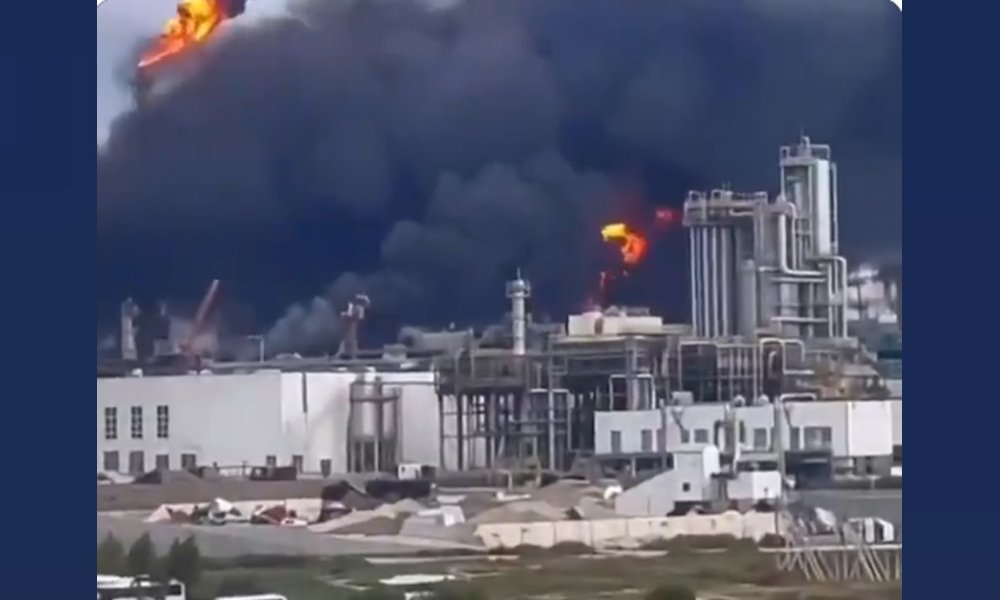
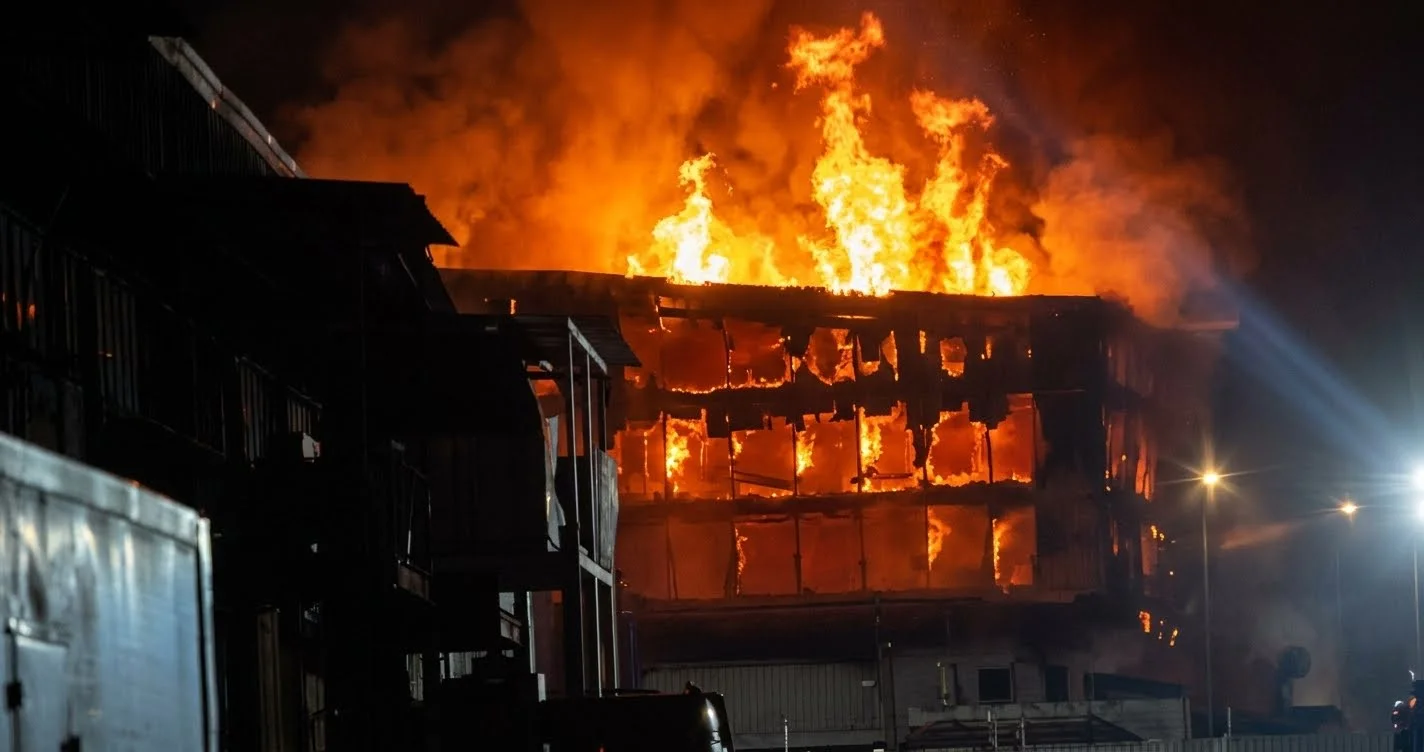
In an initial statement late Saturday night, Bahrain’s Interior Ministry accused Tehran of striking a “civilian industrial facility,” sparking a fire and causing material damage. While officials initially reported no casualties and issued an all-clear following a secondary threat alert after midnight, the ministry updated its toll on Sunday.
“As a result of the heinous Iranian attacks on Bahrain yesterday, a Bahraini citizen with disabilities sustained injuries and is in stable condition, while a Pakistani resident was also injured and is in critical condition,” the ministry said, confirming both victims are hospitalized.
Local residents reported seeing plumes of smoke rising over Sitra Island off Bahrain’s eastern coast, an industrial zone that houses a major refinery operated by the state oil company Bapco.
Iran’s Islamic Revolutionary Guard Corps (IRGC) claimed responsibility for the barrage, stating its missiles and drones targeted U.S. military positions at the Al-Riffa and Awali bases in Bahrain. The IRGC claimed the strikes hit two radar systems belonging to U.S. Army Patriot air defense batteries, warning that any violation of Iranian airspace would draw a “harsh and decisive response.”
The renewed bombardment in the Gulf coincided with fresh maritime incidents in the Strait of Hormuz, where two commercial tankers were struck on Saturday. The United Kingdom Maritime Trade Operations Centre (UKMTO) reported that one vessel was hit by an “unknown projectile” while transiting the waterway without reported casualties, while a second tanker sustained a strike to its engine room.
The strategic chokepoint, which carried roughly one-fifth of the world’s crude prior to the outbreak of the U.S.-Israel-Iran war in late February, remains at the center of a grinding stalemate. While Tehran has sought to blockade the strait, often attributing recent tanker fires to naval mines, U.S. forces have escorted commercial vessels through the passage while enforcing a counter-blockade on Iranian ports.
Against the backdrop of escalating military pressure, diplomatic efforts appear to be continuing behind closed doors. Iranian Deputy Foreign Minister Kazem Gharibabadi confirmed on Saturday that a Qatari delegation visited Tehran the previous evening for two hours of talks, though he declined to share details.
Iranian Foreign Minister Abbas Araghchi urged that regional diplomacy “must be given a chance,” while maintaining a hard line on the maritime standoff. “Our position is clear: as long as Iran’s demands are not met, the discussion on the Strait of Hormuz and its opening is pointless,” Araghchi told state television.
Tehran’s conditions for reopening the waterway include a comprehensive ceasefire across all fronts, the unfreezing of Iranian assets, the lifting of oil sanctions, and an end to the U.S. naval counter-blockade, part of an “economic asphyxiation” campaign Washington launched in August. Gharibabadi warned via the Tasnim news agency that Tehran views the economic blockade as “an act of war” and has notified mediators that it will take all necessary measures to break it.
In a separate interview published Saturday by the state-run Iran Daily, Araghchi also ruled out shipping Iran’s stockpiles of enriched uranium abroad as part of any diplomatic settlement. “I believe a solution can be found, but we have clear red lines: the material will not be taken out of the country,” he said, reiterating Tehran’s stance that its nuclear program is strictly civilian despite Western accusations that it seeks weapons capability.
Meanwhile, the prolonged conflict is taking a heavy domestic toll on Iran’s infrastructure. Iranian President Masoud Pezeshkian acknowledged that U.S. and Israeli strikes on the country’s energy grid have compounded existing shortages, warning citizens to “expect difficulties this winter.” On Sunday, Mohammad Allahdad, head of Iran’s national electricity company, announced the immediate imposition of rolling blackouts across the country due to fuel supply constraints.
Copyright YeJahan News Network, 2026