Last Updated on September 26, 2026 by YeJahan
YEJAHAN REPORT
RIYADH/DUBAI (Sept): US President Donald Trump’s last-minute cancellation of American air strikes on Houthi rebels has emboldened them to move forward to capture strategic heights in Yemen on Monday, aiming to cut off the Red Sea from remaining government-held territory.
A rapid advance by the Iran-backed militia this month has opened a new front in the wider Middle East conflict that could also involve Pakistan, threatening global energy supplies and leaving Washington under intense pressure. The White House has so far resisted repeated pleas from Saudi Arabia’s Crown Prince, Mohammed bin Salman, to intervene directly in the conflict.
According to The New York Times, the Trump administration had prepared to launch air strikes against Houthi positions on Sunday after fresh appeals from Riyadh. However, the paper reported that the President called off the operation at the last minute, even as ground crews were loading munitions onto aircraft. The report could not be independently verified.
The Houthis’ relentless attacks on Saudi Arabia have also raised fears of Pakistan getting involved in the conflict, as one of the top military officials of the Pakistan Army, in a recent interview with Arab News, vowed to “go to any extent” to defend Saudi Arabia against attacks.
“Pakistan fully stands with the Kingdom of Saudi Arabia, both diplomatically and physically,” said the military spokesman, Lt. Gen. Ahmed Sharif Chaudhry.
Chaudhry said Pakistan’s commitment extends to the protection of Islam’s two holiest sites in Makkah and Madinah, reinforcing his statement by saying, “And I would like to underscore here the word physically […] We will go to any extent.”
Pakistan, Turkiye, and Saudi Arabia signed a defence pact on Aug. 7 this year that aims to strengthen collective deterrence among the three countries, building on a Strategic Mutual Defense Agreement.
Rashid al-Alimi, the Riyadh-based president of Yemen’s internationally recognised government, spoke with Donald Trump by telephone on Sunday to request military intervention. Sources familiar with the call said the US President made no firm commitments.
Meanwhile, the conflict has spilt over into Saudi Arabia. Explosions were heard and smoke was seen rising near Riyadh’s international airport on Saturday, marking the first time the capital has been targeted since the latest escalation began. The Houthis claimed they fired missiles at the city; Saudi authorities have declined to comment.
The Houthis, who have held the Yemeni capital of Sana’a since 2014, seized the country’s Red Sea coast earlier this month after routing Saudi-backed government forces. In response, Riyadh has launched hundreds of air strikes against rebel positions in the highlands over recent days.
The United Nations estimates that nearly 700 people have been killed and thousands injured in the latest surge of violence. Around 130,000 Yemenis have been internally displaced, while more than 3,000 have fled across the Red Sea to Africa by boat.
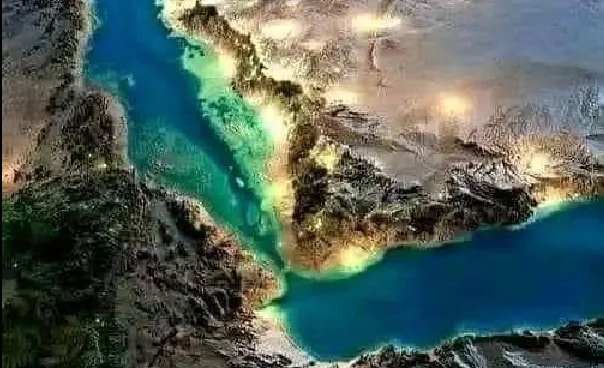
Yemeni military sources said Houthi fighters are now trying to secure the Kahboub Mountains. The strategic heights span Taiz and Lahij provinces, separating the Red Sea coast from the government’s stronghold in the south.
Heavy fighting has been concentrated on the outskirts of the remote Al-Wazi’iyah district in Taiz, as well as Ras al-Ara on the Indian Ocean coast. The latter sits between the vital Bab el-Mandeb Strait and the government’s de facto base in Aden.
“Government forces appear to remain largely on the defensive after losing the Bab el-Mandeb area,” said Mohammed Al-Qadhi, a veteran Yemeni journalist and political analyst. “The Houthis are trying to maintain their momentum despite intensive air strikes. These mountains are critical; they will determine whether the Houthis consolidate their gains or if the government can hold the ground needed for a counteroffensive.”
The escalating warfare presents a political dilemma for Trump. He faces pressure to support traditional Gulf allies but remains wary of deepening US involvement in a volatile region. The administration previously launched a brief bombing campaign against the Houthis in early 2025, but paused operations after a ceasefire was brokered.
The Houthi advance along the Red Sea risks severing the primary alternative shipping route used by Saudi Arabia to export oil without relying on the contested Strait of Hormuz.
Forced to adapt, Riyadh has redirected shipments back through Hormuz. A small fleet of tankers is currently shuttling through the strait to move the crude, with operators demanding record wartime premiums of up to a quarter of the cargo’s value. The oil is then transferred to secondary vessels in the Indian Ocean bound for Asian markets.
Traders report that Saudi Arabia has pre-sold 60 million barrels of oil for delivery this month and next, to be loaded off the coast of Oman. Satellite tracking data shows Saudi exports through Hormuz have surged to 2.9 million barrels per day, up from 700,000 in August.
This increased volume has temporarily capped global crude prices, which eased back toward $100 a barrel after nearing $110 last week. However, consumers continue to face record costs for refined products, with US retail diesel prices hitting a fresh high on Monday.
Risks to shipping in the region remain acute. The UK Maritime Trade Operations (UKMTO) agency reported on Monday that a vessel entering the Strait of Hormuz was struck by an unidentified projectile, causing minor injuries to the crew. The agency also noted a separate, earlier strike on a gas tanker.
Broader diplomatic efforts have stalled since a short-lived interim agreement between Washington and Tehran collapsed in June. Iranian President Masoud Pezeshkian is scheduled to fly to New York today (Tuesday) to attend the UN General Assembly, where the regional crisis is expected to dominate discussions.
Copyright YeJahan News Network, 2026